Causes Kidneys To Retain Water Raises Blood Pressure . Over 72 million americans have hypertension. The hormone aldosterone stimulates the reabsorption of water and sodium ions in the kidney, which results in increased blood pressure and volume. Can Drinking Water Lower Your Blood Pressure Healthy from www.healthybpclub.com High blood pressure can constrict and narrow the blood vessels, which eventually damages and weakens them throughout the body, including in the kidneys. Adults—or about 37 million people—may have chronic kidney disease (ckd). When some of these capillary beds shut down, this puts greater pressure on both your capillaries and arteries, and in turn raises your blood pressure.
What Is The Pressure Gradient. A pressure gradient is the rate of change (gradient) of atmospheric (barometric) pressure with regard to horizontal distance at a given point in time. During inspiration is the alveolar pressure less than atmospheric (negative intrapleural pressure produces expansion the volume of the lungs and the result of that is
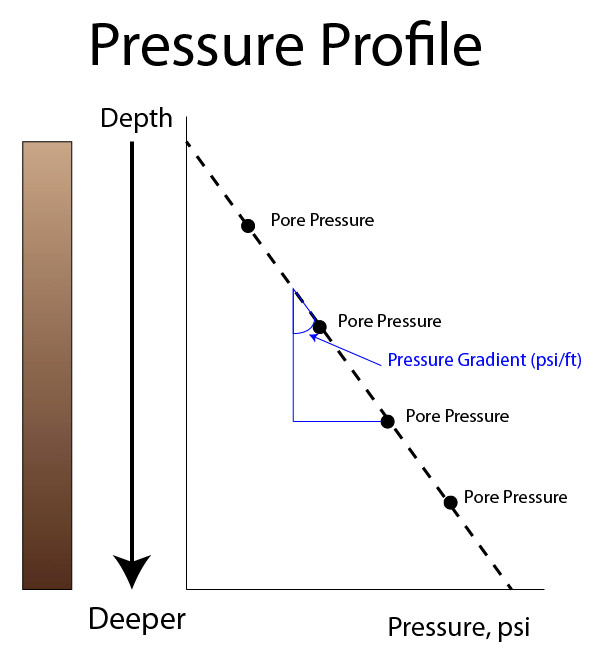
Understand about Formation Pressure in Drilling Drilling from www.drillingformulas.com
An example of a pressure gradient is gale force winds turning into a light breeze in a specific city after an hour. The pgf has the opposite sign to the pressure gradient. What is pressure gradient example?
The Pressure Gradient Force Is Defined As:
Hydrostatic pressure gradient refers to the pressure exerted by the column of fluid per foot of tvd. Where p is pressure and is the fluid density. Fluid density is the controlling factor in the normal hydrostatic gradient.
If An Appreciable Pneumothorax Is Present, The Pressure Gradient From Alveolus To Pleural Cavity Provides A Measure Of The Overall Transmural Pressure Gradient.
In other words, δp is increased by either an increase in flow or resistance. The rate of decrease in barometric pressure. (1) the dimensional formula of distance = [m 0 l 1 t 0].
Assuming That The Fluid Is Incompressible, This Is A Linear Relationship.
The transmural pressure gradient is the difference between intrathoracic (or ‘intrapleural’) and alveolar pressure. The hydrostatic pressure gradient is the rate of change in formation fluid pressure with depth. Rocky mountains, a formation water gradient of 0.45 psi/ft is common.
The Streamlinefaqwhat Pressure Gradient Along The Streamlineadminsend Emaildecember 14, 2021 Minutes Read You Are Watching What Pressure Gradient Along The Streamline Lisbdnet.comcontents1 What Pressure Gradient Along The.
For example, if my depth is 2000 ft. For example, under laminar flow conditions, doubling the flow across a heart valve. And my gradient is 0.425 psi/ft, then my pressure is 2000 ft.
Gulf Coast, A Gradient Of 0.465 Psi/Ft Is Common.
The vertical pressure gradient always indicates a decrease in pressure with altitude, but the rate of pressure decrease (gradient) varies directly with changes in air density with altitude.pressure gradient force is the force that moves air from an area of high pressure to an area of low pressure. The value is usually expressed in mb per 100 mi. The pressure within an alveolus is always greater than the pressure in the surrounding interstitial tissue except when the volume has been reduced to zero.


Comments
Post a Comment